Observations from the Future of Protein Production and Cultured Meat Symposium, Amsterdam, November 4–5, 2026
1. An Industry at a Crossroads
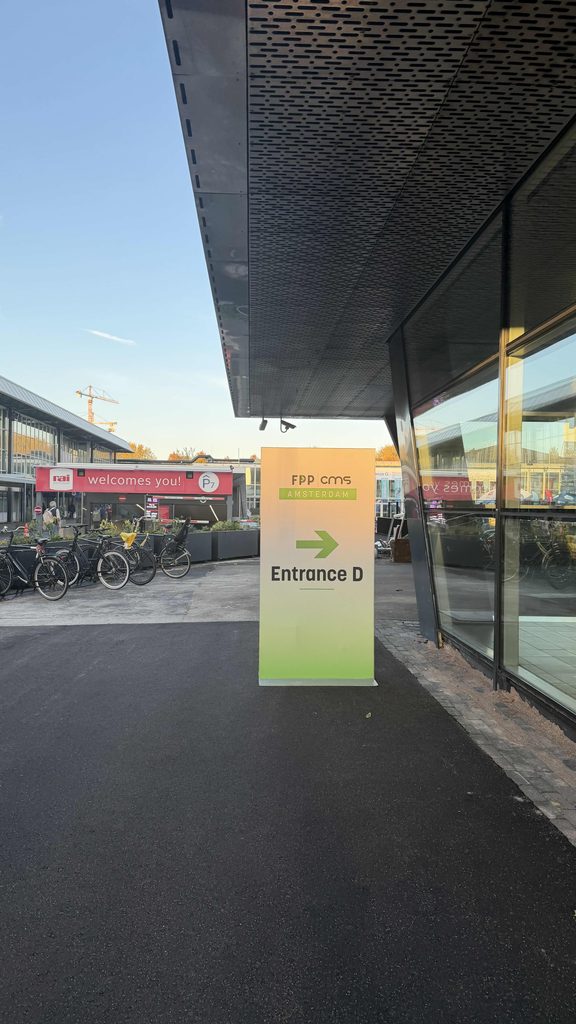
The Future of Protein Production (FPP) and Cultured Meat Symposium (CMS) brought researchers, entrepreneurs, investors, and other industry professionals together in Amsterdam on November 4–5, 2026.
Across two days of presentations, panel discussions, exhibitions, and workshops, questions about commercialization emerged repeatedly alongside discussions of scientific and technological progress.
For many companies, the challenges extend well beyond developing a promising technology. Regulatory procedures, financing, production scale, and the ability to bring products to market continue to shape their decisions.
One question seemed particularly relevant throughout the event: how can scientific advances become commercially viable products that reach consumers?
2. Beyond Technology: Changing the Food System
Three consecutive presentations on the opening morning highlighted different challenges beyond technological development.
Sarah Lieder of Unilever discussed what major food manufacturers need from novel ingredients, including taste, functionality, cost, and consumer acceptance.
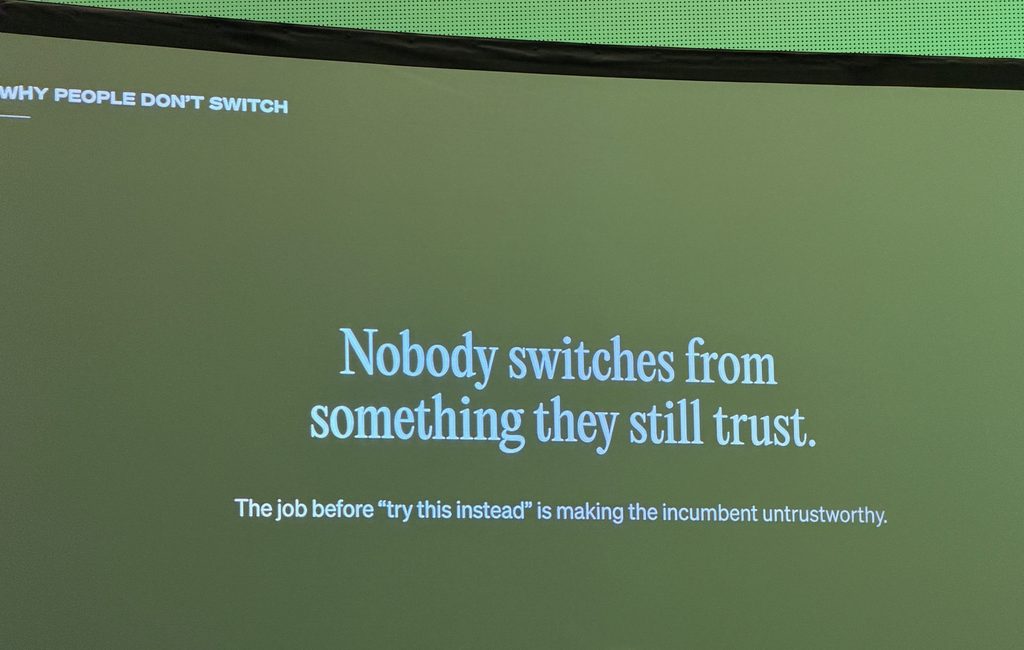
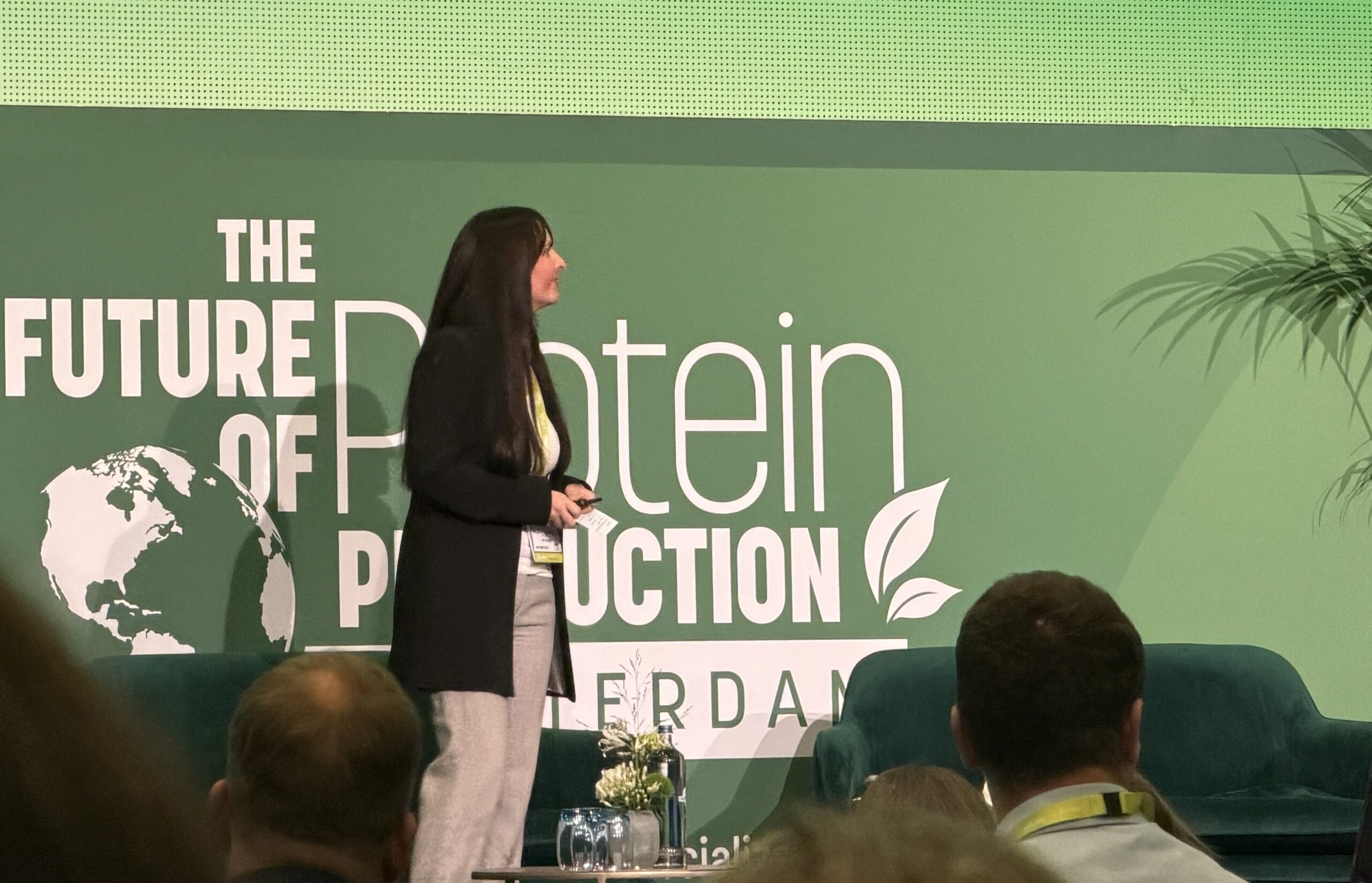
Naomi Hallum of Project Slingshot then shifted the focus to communication, exploring how to reach people beyond the existing plant-based audience. One of her messages stayed with me: “Nobody switches from something they still trust.”
Caroline Orfila Jenkins of Oatly followed with a presentation on how science, culture, and branding can help turn an alternative product into something consumers choose repeatedly.
Together, the sessions raised a question that would remain relevant throughout the conference: developing new food technologies is one challenge, but how do we make them part of everyday life?
3. The Road to Commercialization
Regulatory procedures were a recurring topic throughout the conference.
For companies developing cultivated meat and ingredients produced through precision fermentation, the ability to manufacture a product does not necessarily mean it can be sold in the intended market.
The European Union’s Novel Food framework was a particular focus of discussion, with speakers raising concerns about the time and resources required to navigate authorization procedures.
The issue is not simply whether food safety should be assessed. It is also how regulatory processes affect investment decisions, development timelines, and the location of future commercial activities.
Some discussions reflected frustration with the pace of European market access. In conversations about where companies might prioritize production and commercialization, responses were not always straightforward commitments to Europe.
Commercialization also involves challenges beyond regulation.
During discussions involving investors, the importance of experiencing actual products was raised. Technical achievements and projections matter, but they do not replace questions about product quality, customer demand, and the economics of production.
These discussions left an impression of an industry moving beyond purely technological questions, while still facing considerable uncertainty about how and where commercial growth will occur.
4. Different Routes to Market
European alternative protein companies are responding to these challenges in different ways.
Some have pursued pet food applications. Others have sought regulatory clearance outside the EU, formed international partnerships, or developed new approaches to production.
The following examples combine observations from the conference with publicly reported company developments.
Bene Meat Technologies: Commercializing Through Pet Food
Pet food offers a different regulatory route from cultivated meat intended for human consumption.
Czech company Bene Meat Technologies has pursued this market through a collaboration with Italian pet food company FORZA10.
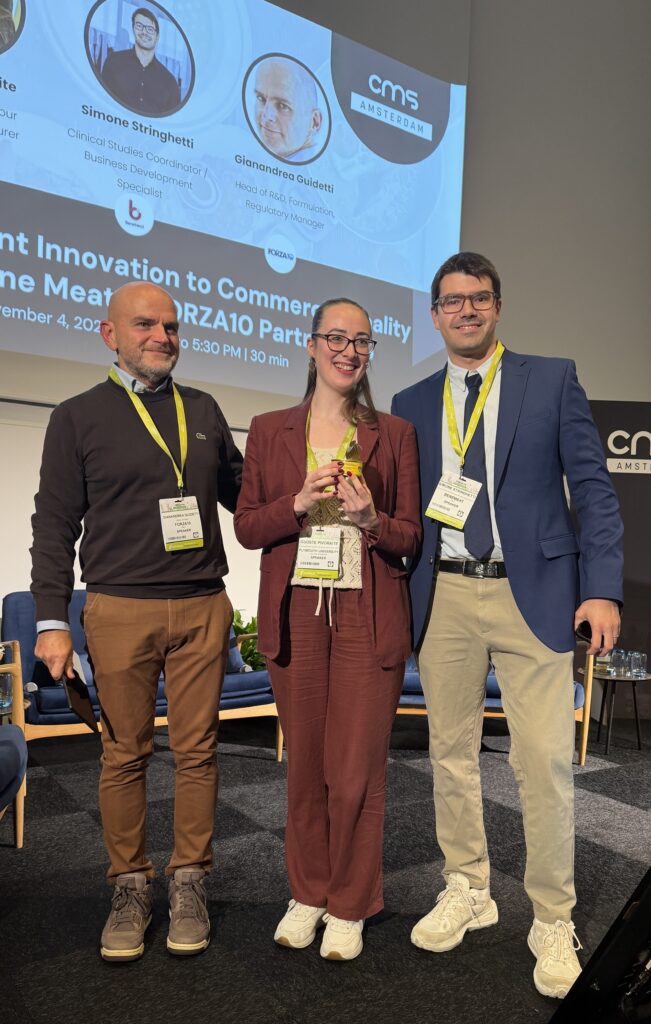
At CMS, representatives from both companies presented their work together. According to Bene Meat representatives at the conference, products containing the company’s cultivated meat were already being sold in five countries.
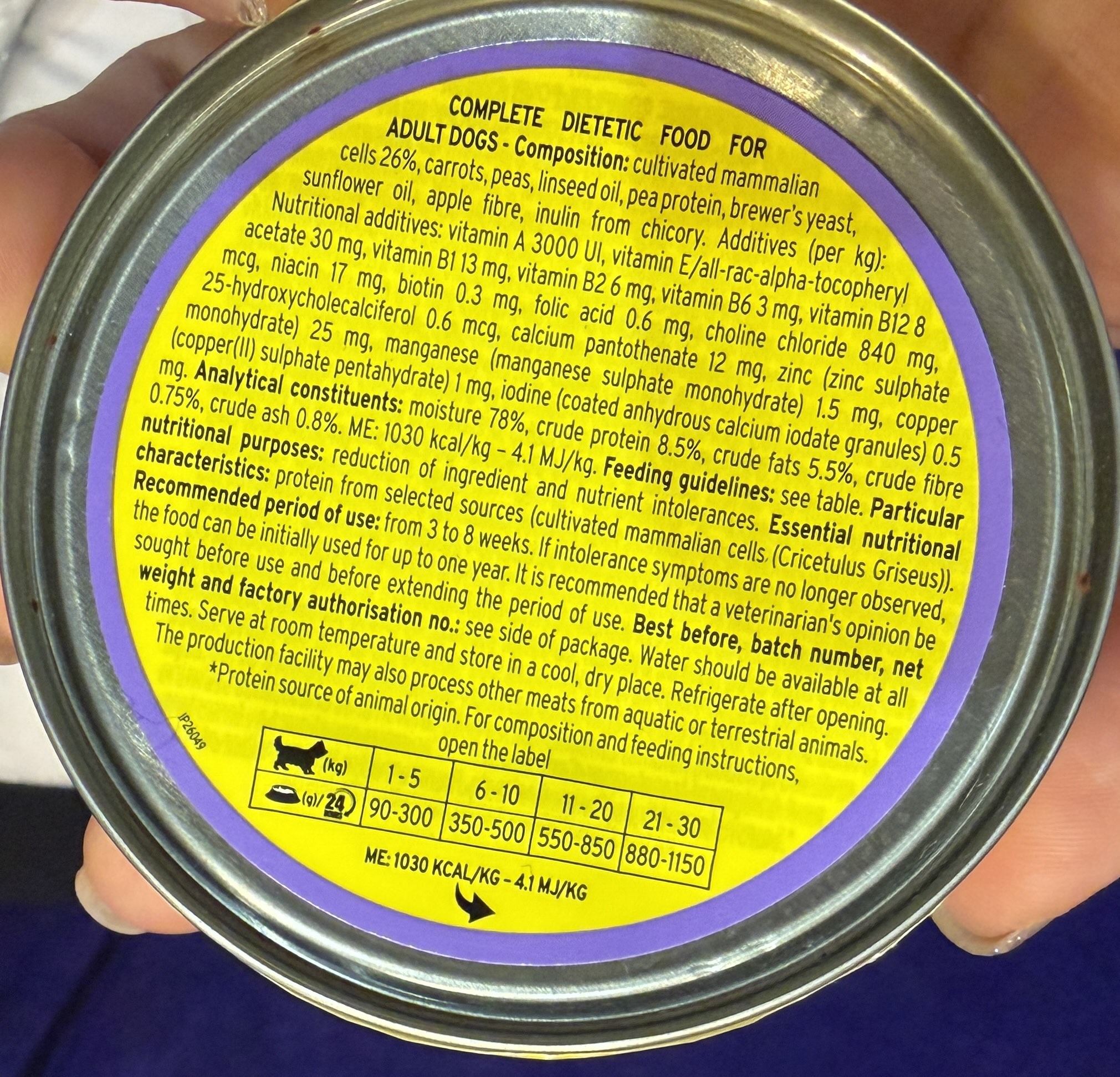
One of the products presented was FORZA10’s Coolty Meat pet food.
The ingredient list identified the main ingredient as “cultivated mammalian cells” (26%). During the panel discussion, however, Simone Stringhetti of Bene Meat Technologies explicitly stated that the cells came from hamsters — a detail not specified on the packaging.
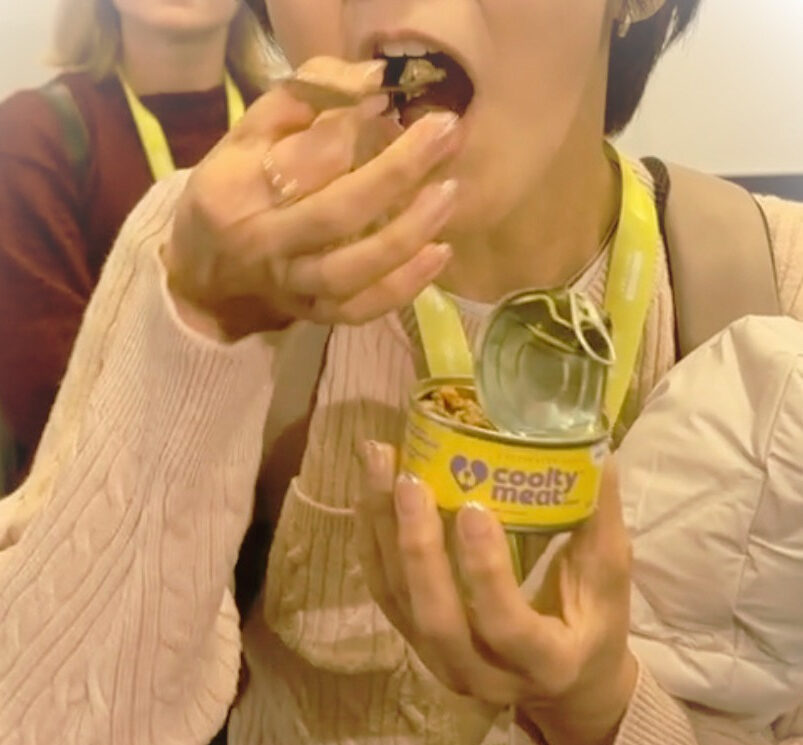
I also had an opportunity to taste a small amount of the pet food during the presentation.
To me, the flavor resembled liver pâté, although the product contained other ingredients that could have contributed to its taste.
It was an unusual tasting experience, but also a memorable reminder that cultivated animal cells are already being incorporated into commercial food products, even if their first applications are not necessarily intended for human consumption.
PARIMA: International Partnerships and Market Access
French cultivated meat company PARIMA, formerly known as Gourmey, has pursued opportunities outside the European Union.
The company has reported regulatory milestones in Singapore involving cultivated chicken and duck, alongside a manufacturing and scale-up partnership with Australian cultivated meat company Vow.
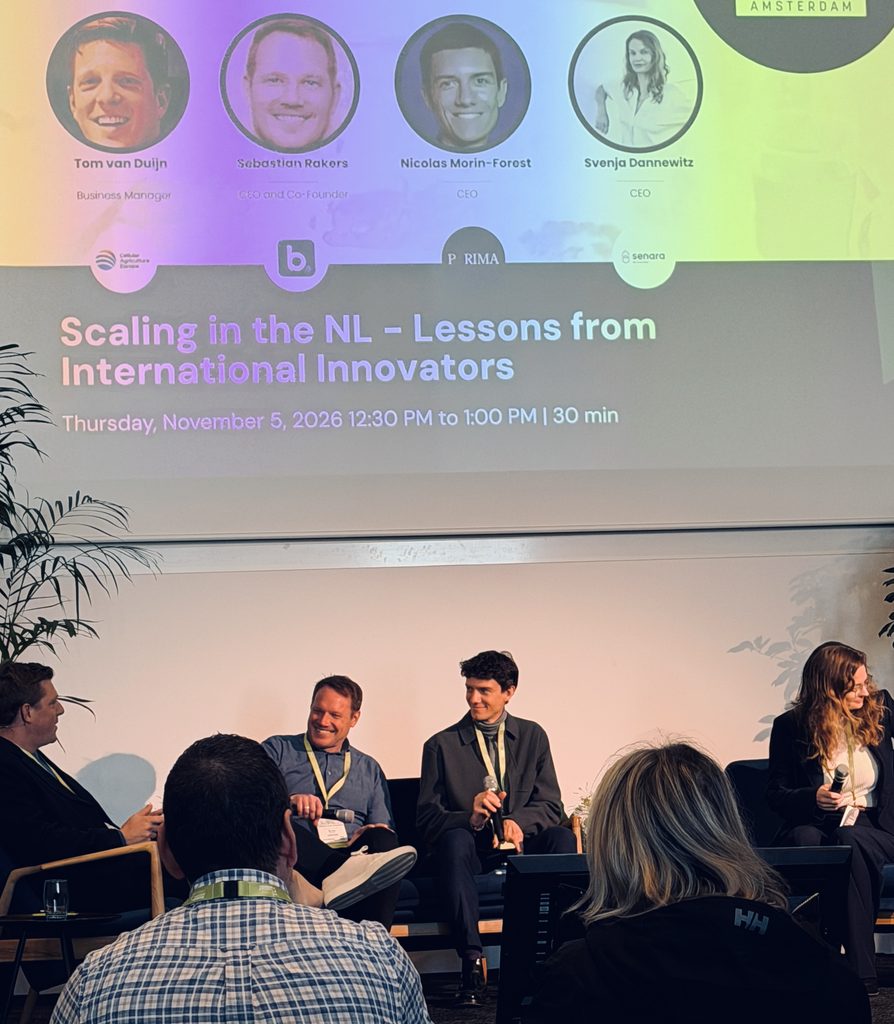
PARIMA CEO Nicolas Morin-Forest participated in two panel discussions during the symposium, including Scaling in the NL – Lessons from International Innovators on November 5.
Speaking at CMS, Morin-Forest emphasized that cultivated products need to offer advantages beyond ethical or environmental considerations. Using cultivated foie gras as an example, he discussed the importance of consistent quality and cooking performance for chefs.
PARIMA’s recent regulatory progress stood out to me against the backdrop of repeated discussions about European authorization timelines.
Its international activities offer an example of how a European company can pursue commercial opportunities across multiple jurisdictions.
I’ll be taking a closer look at PARIMA in a separate article, drawing on CEO Nicolas Morin-Forest’s remarks across two panel discussions at the symposium.
RespectFarms: A New Production Model for Existing Farms
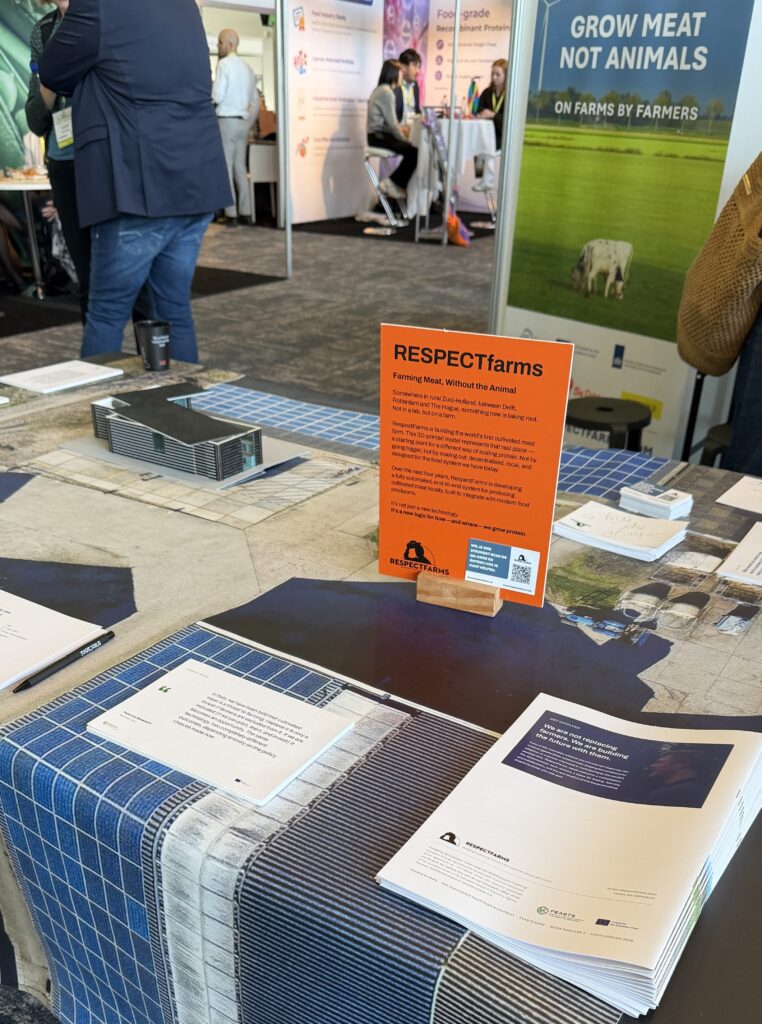
Dutch company RespectFarms is exploring how cultivated meat production might be integrated into existing agricultural businesses.
The company has installed a cultivated meat production unit at the farm of Corné van Leeuwen in the Netherlands.
Its model involves collaboration with participating farmers, while RespectFarms provides specialized expertise in cultivated meat production.
Research published by the company found that approximately 10% of the Dutch livestock farmers surveyed expressed a positive attitude toward the idea of producing cultivated meat on farms.
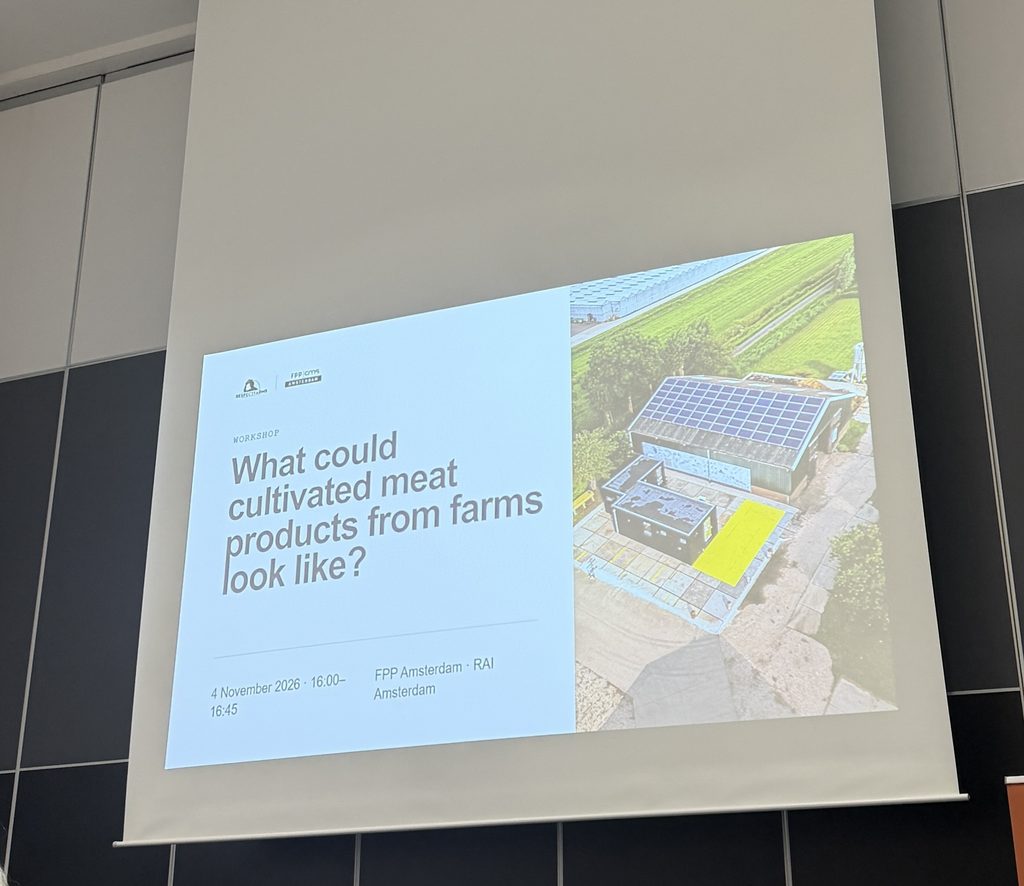
At CMS, I joined a workshop led by RespectFarms CEO Ira van Eelen. Participants explored what kinds of cultivated meat products could be developed through farm-based production and how they might be marketed.
The discussion connected directly with questions facing the emerging business model.
What products should participating farms produce? Who would buy them? And what would make the model commercially viable?
How farmers might ultimately balance cultivated meat production with their existing agricultural activities remains uncertain.
The experience of the first participating farm could provide valuable insights into the model’s practical and economic potential. If successful, it may also encourage interest among other farmers.
5. Closing Observations: What Comes Next?
The discussions in Amsterdam reflected both the progress and the unresolved challenges facing the alternative protein industry.
Scientific innovation remains essential. But regulatory pathways, financing, production economics, partnerships, and consumer demand are equally important to bringing new foods into everyday use.
The companies discussed here illustrate different responses to these challenges.
Some have already entered commercial markets. Others have achieved regulatory milestones, established partnerships, or begun testing new production models.
Their outcomes are not yet comparable, and commercial success cannot be assumed.
Nevertheless, the variety of approaches suggests that there will be no single route from technological development to market adoption.
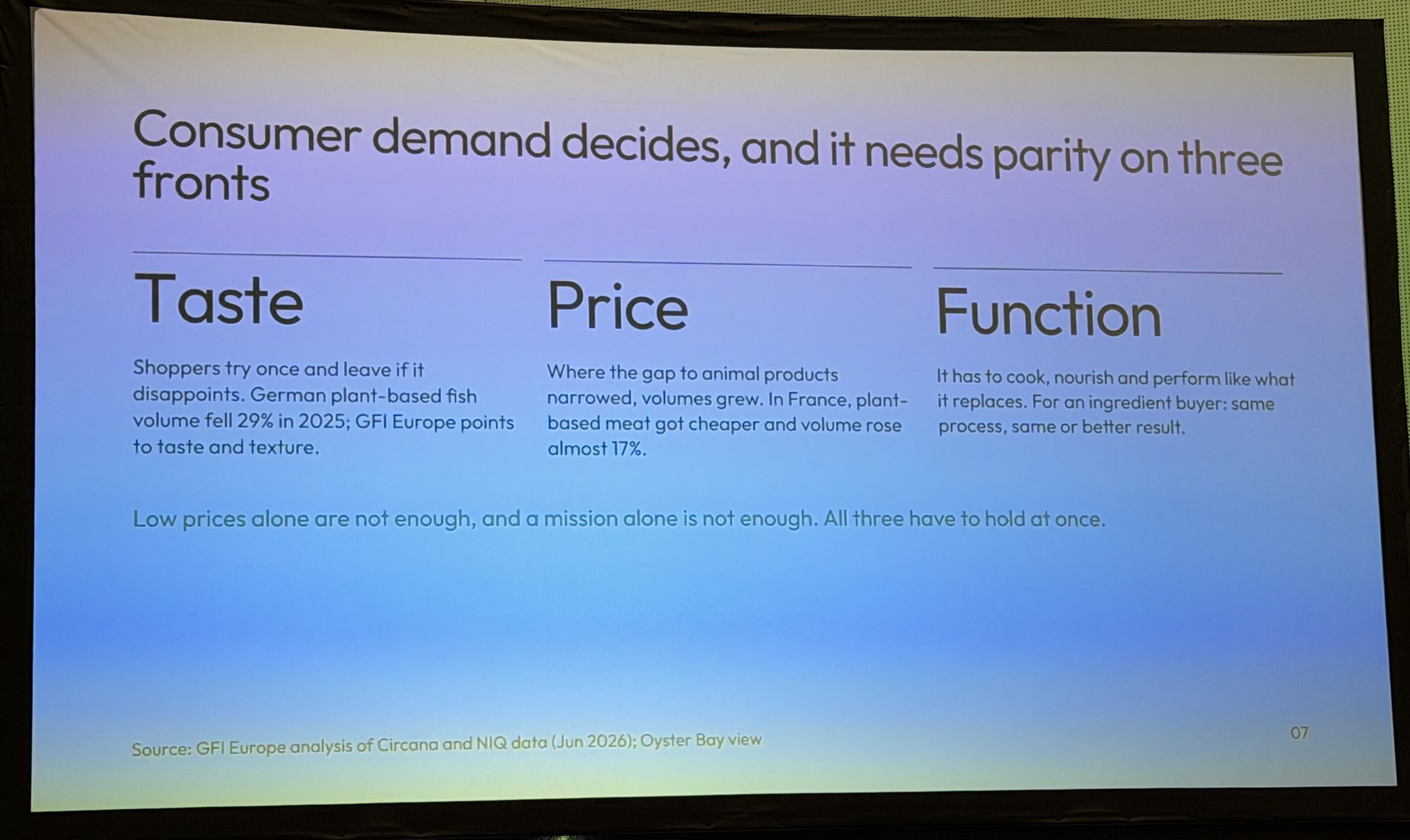
During the closing discussions, Felix Leonhardt of Oyster Bay emphasized a straightforward requirement for commercial success:
“The product needs to be great.”
The observation brought the discussion back to a fundamental question. Attracting initial curiosity is one thing; developing a product that customers want to purchase repeatedly is another.
For me, one of the clearest impressions from FPP Amsterdam 2026 was that the industry’s next phase will be shaped not only by what scientists can develop, but also by how companies, regulators, producers, and consumers respond to those innovations.
A Personal Reflection
My interest in these technologies begins with the animals whose lives are shaped by our existing food system.
Scientific progress matters enormously. But what ultimately matters to me is whether these developments can help reduce our dependence on industrial animal agriculture and, eventually, make a different food system possible.
Attending FPP Amsterdam gave me an opportunity to hear directly from people working to turn these technologies into products and businesses. It also made the distance between technological development and public awareness feel particularly significant.
In conversations with people outside the industry across Japan, the United States, China, South Korea, and Taiwan, I have yet to meet anyone truly familiar with these emerging food technologies, let alone their potential to address some of the problems facing our food system.
That observation is not a measure of public awareness as a whole. But it has shaped how I think about the challenges ahead.
The technologies discussed in Amsterdam may offer ways to produce familiar foods without relying on conventional animal agriculture. Yet their potential will mean little if they remain unfamiliar, inaccessible, or unable to compete in the markets where people make everyday food choices.
The challenges facing this industry are substantial, and there is no reason to assume that every promising company or technology will succeed.
Still, the conversations in Amsterdam reinforced why I want to keep following this field — not only its scientific advances, but also the difficult, less visible work of bringing alternatives into everyday life.
For the animals living within today’s food system, the pace of that transition matters.
Report and photography: Mack Narita
November 2026