Singapore, April 2026
I bought cultivated chicken in Singapore and cooked it myself.
Not at a media tasting.
Not at a conference.
Not in a lab.
In a normal city.
From a normal store.
Back to a normal kitchen.
And that may be the most important part.
Then I tasted it.
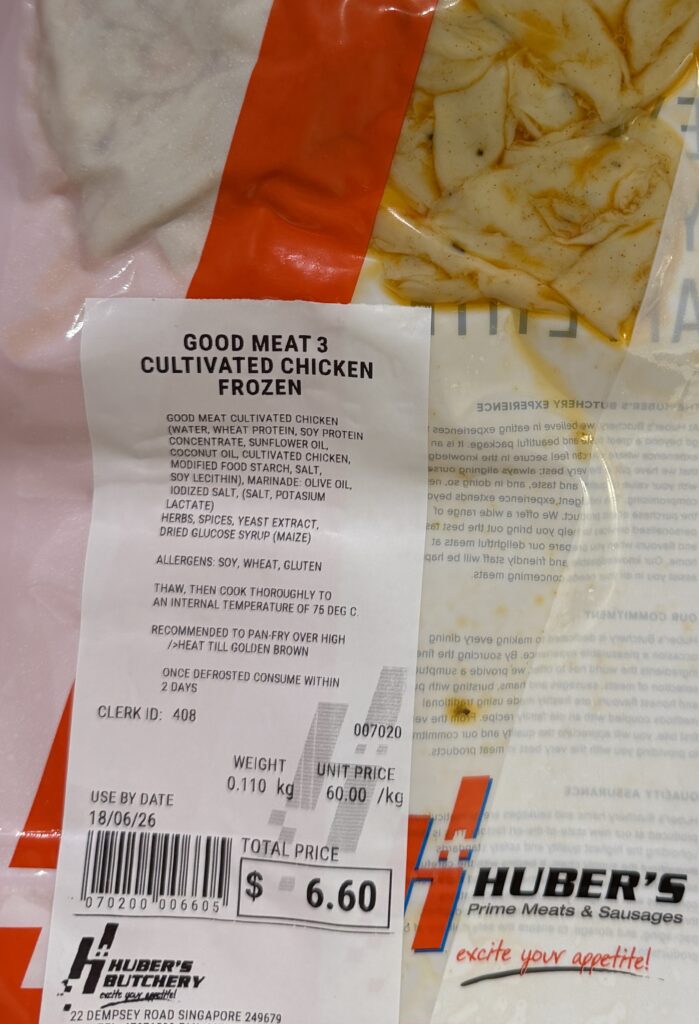
And the number on the package stayed in my mind:
3%.
Why Singapore Matters
Singapore is, for now, one of the only places where cultivated meat has entered the consumer market.
Not only served in special restaurants.
Not only discussed at conferences.
But sold as food people can bring home and cook in their own kitchens.
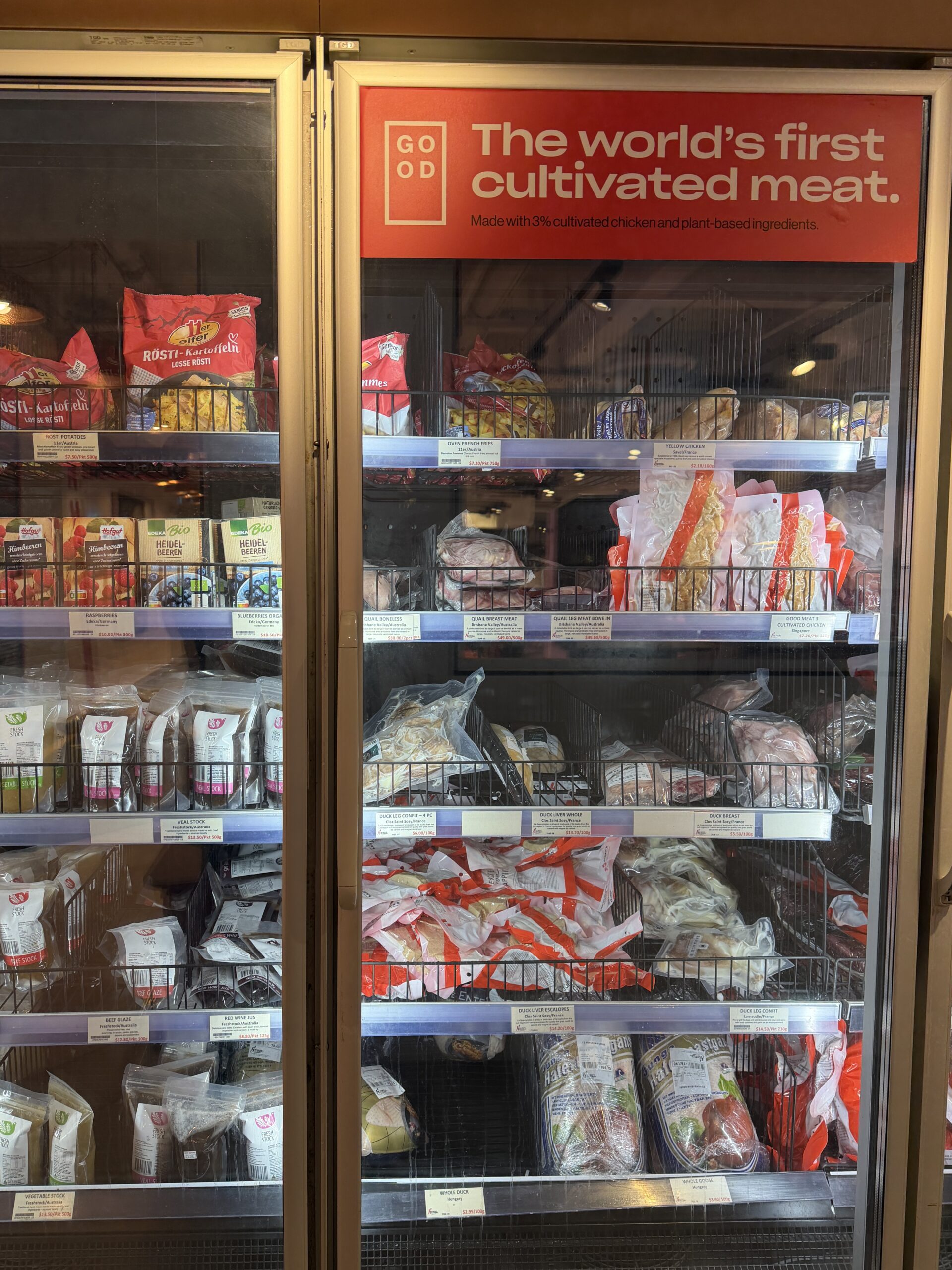
GOOD Meat’s 3% cultivated chicken can be purchased at Huber’s Butchery in Dempsey.
That distinction matters.
Many countries can offer a tasting.
Singapore offers a glimpse of normal life.
Note: Australia’s Vow also sells ready-to-eat products made with cultivated Japanese quail.
The Taste of 3%
This product, GOOD Meat 3, contained only 3% cultivated chicken.
And yet, it already hinted at something larger.
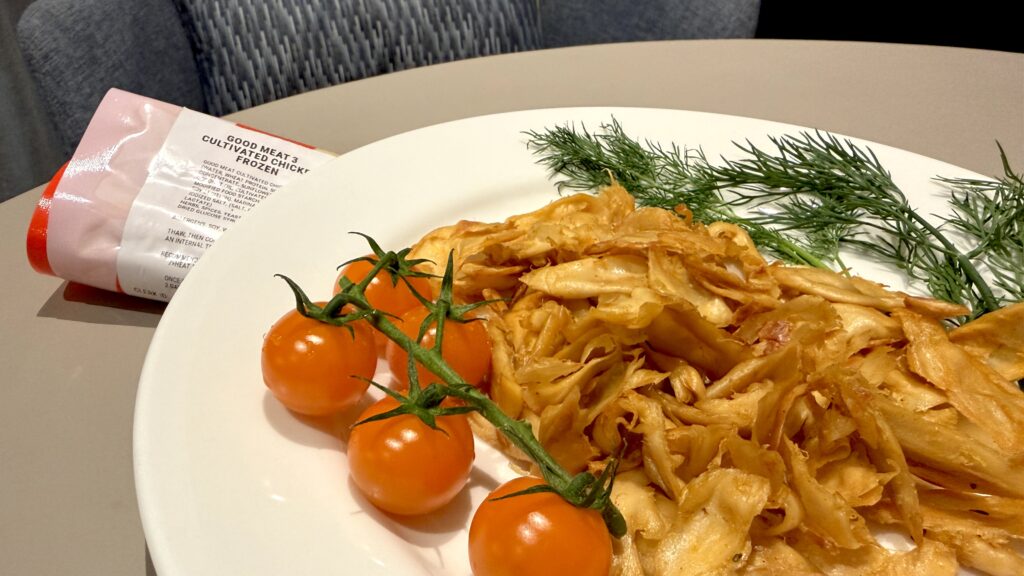
I thawed the package in the fridge and cooked it slowly in a pan.
The aroma while cooking did not immediately feel like chicken.
The pieces were thin—
more like layers of yuba than fibrous meat.
It seemed less focused on replicating muscle fibers,
and more on creating a gentle bite and familiar texture.
The flavor was mild.
Not bad at all.
To me, it felt less like a finished product and more like an invitation:
Taste cultivated meat.
Imagine what comes next.
As someone who often eats plant-based meats, even a subtle chicken note felt meaningful.
If I had a home kitchen, I would have loved to season it myself.
And yes—
I’d buy it again every time I visit Singapore.
What the Future Might Look Like
Cultivated meat is one possible path toward proteins that are cruelty-free, slaughter-free, and gentler on limited resources such as land and water.
When will cultivated meat overtake conventional animal meat in everyday consumption?
In 5 years?
10?
30?
100?
The answer will not be decided by governments or industry alone.
It will be shaped by each of us.
Technology is advancing every day to deliver meat and fish with fewer antibiotics, fewer hormones, fewer contaminants, and greater control over safety.
The future of food is found not by letting go of what we inherited, but by changing gear with it.
A Small Moment I Won’t Forget
One moment has stayed with me.
At Huber’s, I walked past rows and rows of conventional meat.
Everywhere I looked:
meat,
more meat,
every cut,
every species,
every demand already mapped and packaged.
Then, in the back, inside a freezer, two small rows of cultivated chicken.
That contrast was hard to ignore.
Not because the future was absent.
Because it was there —
just small.
I found myself wondering how slowly — or how suddenly — those shelves might begin to change.
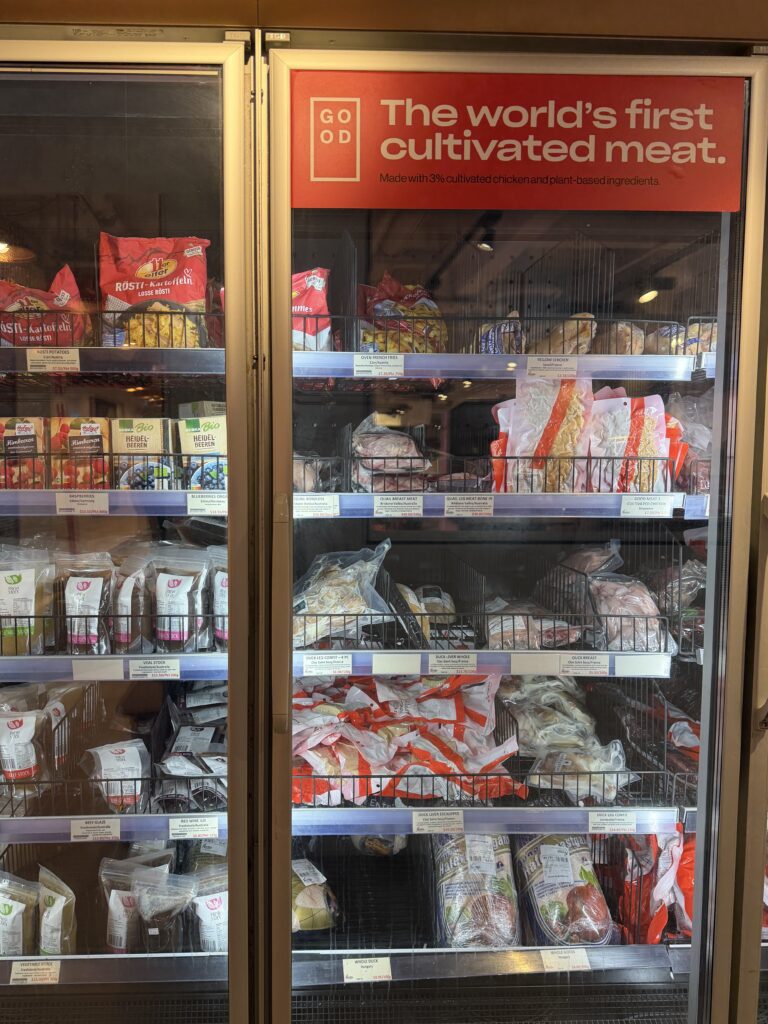
Sometimes the future begins
in a small freezer section.